
Mackenzie sits 28 km off the highway at the south end of Williston Lake, and being off the mainline is exactly why a lot of trades never turn up. We do. Solar, battery storage and backup power, as a licensed electrical contractor.
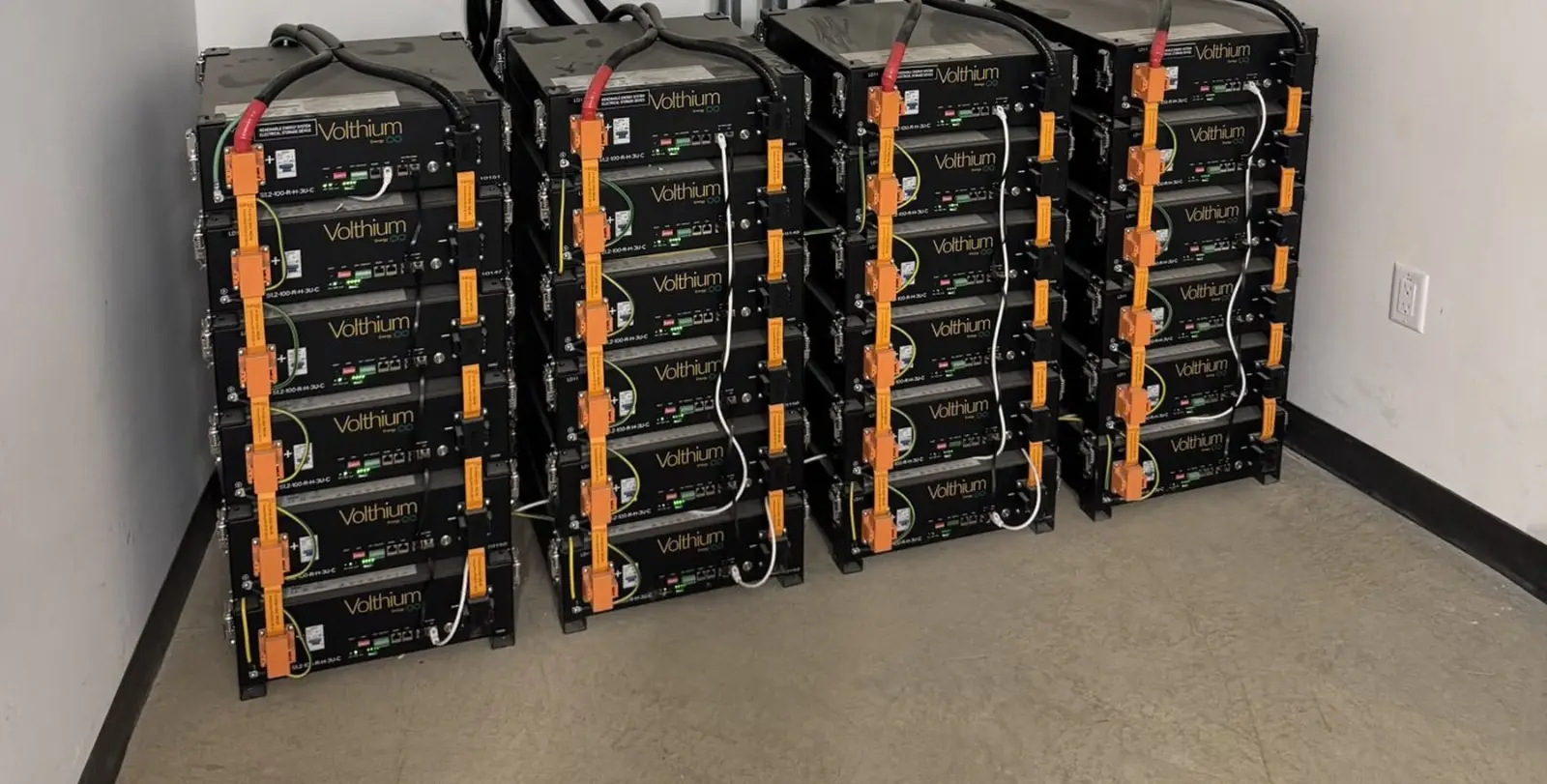
A battery paired with an automatic generator changeover means a winter outage does not depend on someone being home to start something.
Solar trims a bill that keeps climbing, and the equipment is yours.
The rec centre, the hall, the shop: buildings that draw hard in daylight are where an array pays back fastest, and where larger funding is available.
Mackenzie is about 183 km from our shop, north on Highway 97 and then in on Highway 39. That is a real drive. It is priced into the job, and a warranty callback in year four gets the same drive as the install did.
Mackenzie carries a ground snow load of 5.1 kPa — the third heaviest anywhere we work, behind Kitimat and Terrace on the coast, and half again what Prince George sits at. At 765 metres beside the Williston Reservoir, it holds its winter.
That number is the reason a Mackenzie roof gets designed rather than assumed. Many modules are rated to 5,400 Pa in testing, about 3.6 kPa as a design load, and the design roof snow load works out below the ground figure on a sloped roof, so a correctly built array is not in difficulty. But the margin is thinner than it is in Prince George, which turns good practice into non-negotiable practice: clamps exactly where the module manufacturer specifies, attachments into structure rather than sheathing, and nothing at all sited in a drift zone.
Ask any installer this in Mackenzie. What design snow load did you use for my roof, and what is the rated mechanical load of the module you are proposing? Those are two specific numbers, and anyone working properly here has both written down before they quote. Why drift zones and clamp positions are where arrays actually fail is explained here.
Mackenzie is also an industrial town, and where there is a large roof over a real daytime load — compressors, ventilation, lighting, shop heat — the case is stronger than it is on a house, because power used as it is generated offsets electricity bought at the higher rate instead of being exported at the lower one.
BC Hydro closed net metering to new customers on 1 July 2026. Under the Self-Generation rate that replaced it, the power you export is bought at 10 cents per kWh and credited on every bill rather than settled once a year.
Rebates are still on the table — up to $5,000 on solar and up to $5,000 on a battery enrolled in the utility’s peak-saving program, or up to $1,500 for a battery installed with solar. But since 1 June 2026 they are only paid when the work is done by a Home Performance Contractor Network member. We are one. If your installer is not, the rebate simply does not get paid.
Want a number before you call? The solar savings calculator uses our own pricing and your actual BC Hydro consumption to size a system and estimate the payback for a home in Mackenzie.
Send a recent hydro bill and a photo of the roof or yard, and we will work out what an array there would produce.
Get a free quote(250) 532-2873Nechako Solar is a member of the Home Performance Contractor Network (HPCN), an independent network; you can check that in the HPCN directory.